
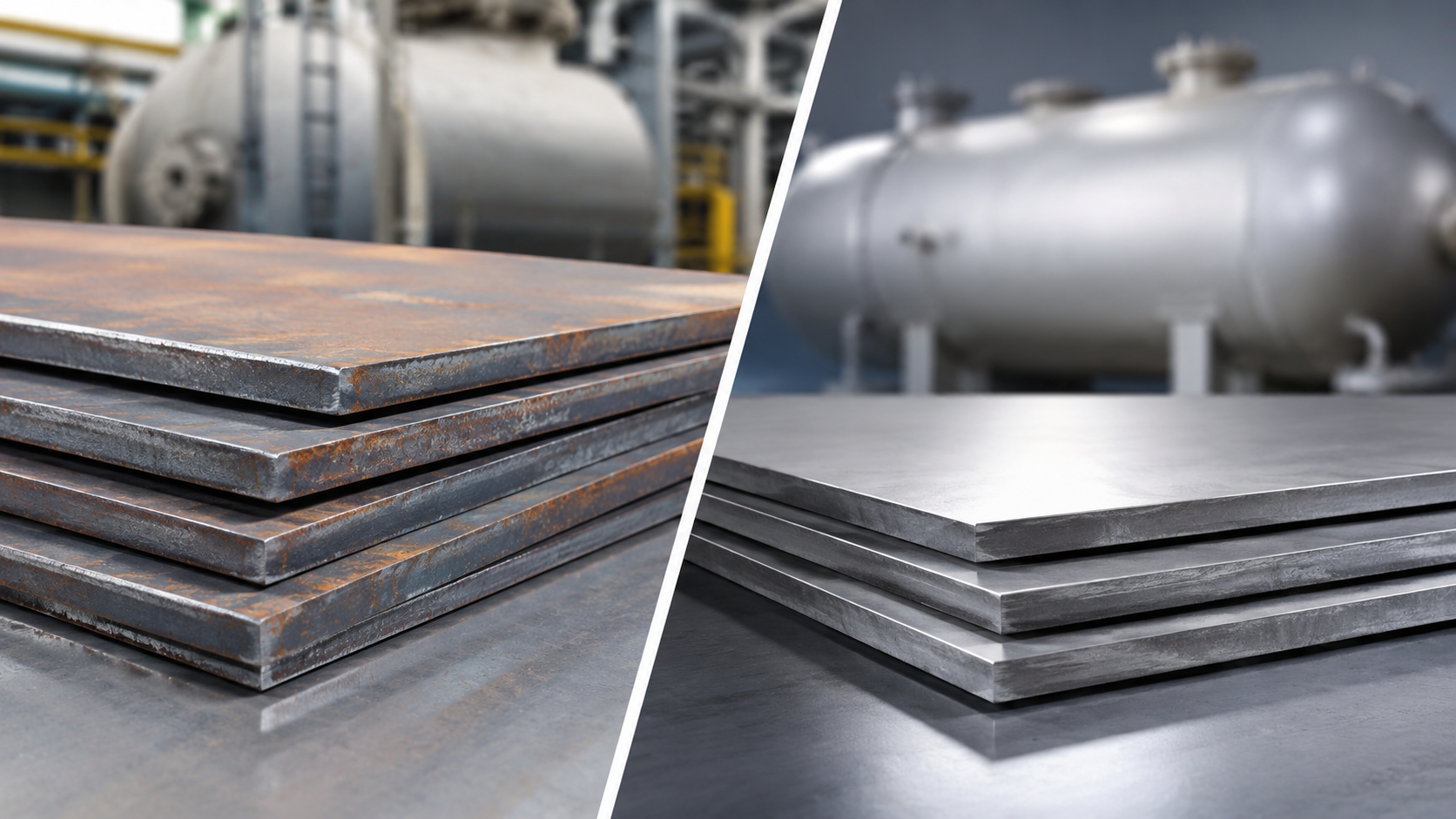
Selecting the right steel plate for industrial use is a matter of safety and sound engineering judgement. People usually want to know the difference between boiler steel plates and pressure vessel plates. These two items are often confused because they both handle pressure. However, the way they deal with heat and internal stress is different. Using the wrong one can cause a tank to fail or a boiler to crack under heat.
Industries like oil & gas and power generation use these plates for containment. The choice of material determines how long the equipment lasts. We provide boiler steel plates that meet specific ISO standards to ensure they don’t fail when the heat goes up.
What are Boiler Steel Plates?
Boiler Plate Steel is a type of carbon or alloy steel. It is made specifically for boilers and heat exchangers. These plates have to handle internal pressure while being exposed to direct flames or very hot gases. This is a tough environment for metal. As a boiler steel plates manufacturer, we at Eckhardt Steel focus on making sure these plates have high weldability. They must stay strong even when the temperature keeps on changing.
Manufacturing these plates follows standards like ASTM A516 or A515. A516 is common for moderate temperatures. A515 is used when the heat is higher. The steel must be “killed” which means it is totally deoxidized during the making. This prevents gas bubbles and makes the plate more reliable. You will see these in steam drums and furnace parts.
What are Pressure Vessel Plates?
Pressure vessel steel plates are used to manufacture containers for storage of liquids or gases under pressure. Unlike boilers, these vessels don’t always face direct heat. They could be used as storage tanks or chemical reactors; The focus here is the tensile strength. The plate must be able to hold the pressure without bulging or leaking.
We act as high pressure vessels steel plates suppliers for many different industries. These plates need to be very durable. Common grades include ASTM A537 or specialized stainless steel. In some cases, these vessels work in very cold temperatures. For those, we provide plates that can handle cryogenic conditions without becoming brittle. These are used to store such things as natural gas or liquid nitrogen.
Boiler Steel Plates vs Pressure Vessel Plates: Key Differences
The main difference between these two plates is the environment they are exposed to.
Operating Conditions: Boiler plates face heat and pressure simultaneously. Pressure vessel plates mostly deal with the physical force of the contents pushing outward.
Material Composition: Boiler Plate Steel has more carbon or manganese to handle heat. Pressure vessel plates might have different alloys to stop corrosion from chemicals.
Temperature Resistance: Boiler plates are for high heat creep resistance. That means the metal won’t slowly elongate under heat for a long period of time. Pressure vessel plates are more versatile. They can be made for extreme cold or normal room temperatures.
Pressure Handling Capacity: Both are good under pressure. The only difference being pressure vessel plates are often thicker. This helps them hold massive amounts of gas or liquid without any risk of a burst.
High-pressure vessel steel plates suppliers usually check the “notch toughness” of the steel to make sure it doesn’t snap under sudden pressure changes.
Industrial Applications of Boiler and Pressure Vessel Plates
The application and material of Boiler Steel Plates are linked to how the factory operates. Different industries have different risks.
- Thermal Power Plants: Boiler plates are used for steam drums where water turns to steam.
- Refineries: They are using both of them. They need pressure vessels to store the crude and boilers for the refining process.
- Petrochemical: Used for reactors that handle high-pressure chemical reactions.
- Oil & Gas: These plates are used by storage tanks and transport tankers for the safety of their products.
- Chemical Processing: Here, the vessels have often to resist acid or other strong liquids.
- Heavy Engineering: Making heat exchangers and large storage spheres.
How to Choose the Right Steel Plate for Your Project
Choosing the right steel plate for your project depends on various factors.
- Temperature: If it is near a fire, use a boiler grade.
- Pressure: If the situation demands the tank to hold higher PSI, thicker plates are usually chosen.
- Corrosion: Choose stainless or alloy plate for acidic liquid.
- Compliance: Follow ASME or other local safety codes.
- Fabrication: The ease of welding is also a major factor.
Always consult a reputed boiler steel plates manufacturer for the choice of material for your project. This prevents mistakes during the build.
Conclusion
The main difference is how the plates handle heat. Boiler steel plates are for high-temperature pressure. Pressure vessel plates are for general high-pressure storage. Picking the right one is about safety. If you use a standard plate where a boiler plate is needed, the metal will weaken too fast.
Eckhardt Steel & Alloys provides high-quality plates that meet these industrial needs. We ensure every product is inspected for quality. Contact our team in Mumbai for your project-based steel requirements. We can help you pick the right grade and thickness for your specific application.