
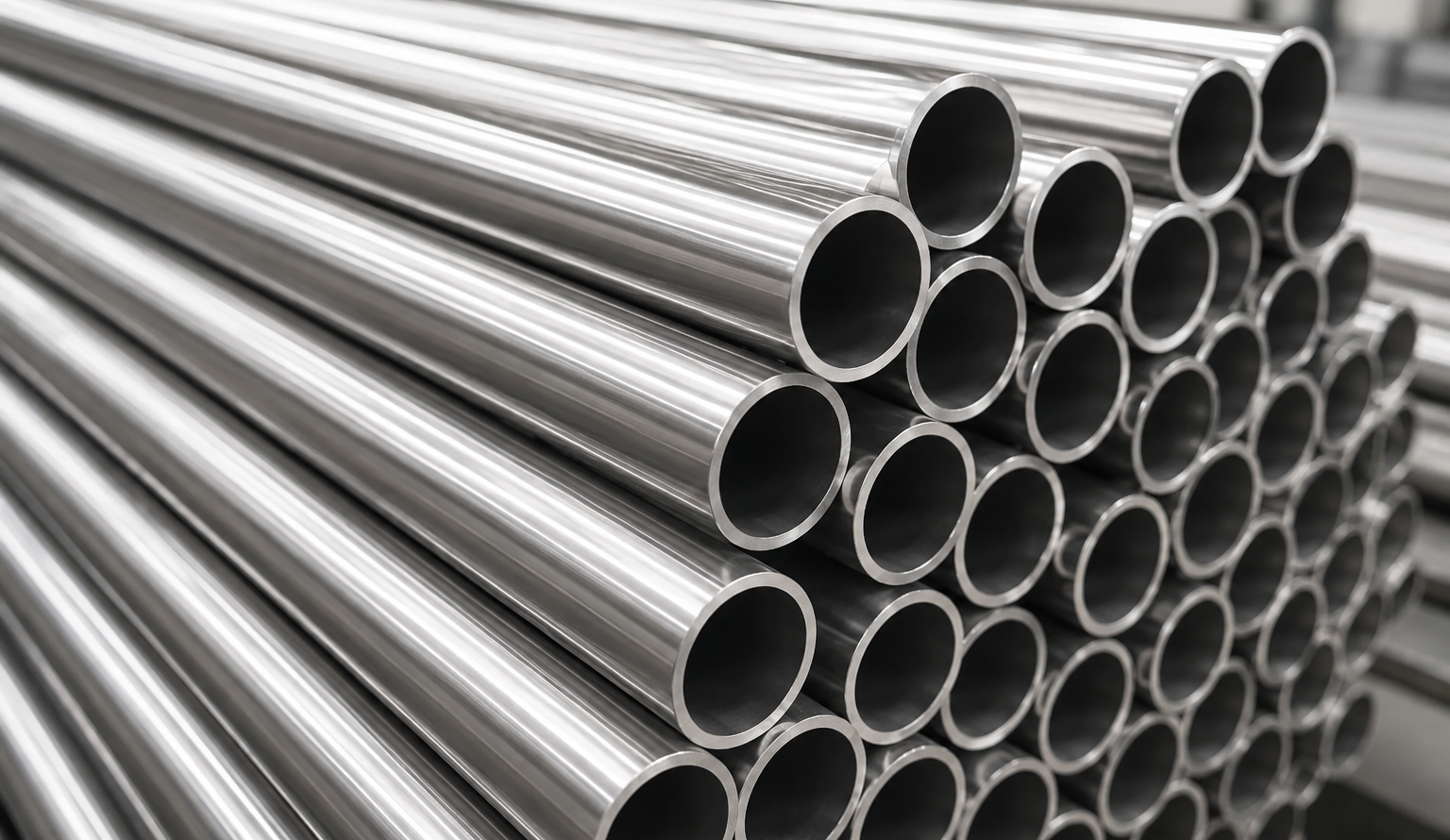
A wrong grade or a missing certificate can hold up a fabrication job for weeks. Two pipes can look exactly the same sitting in a warehouse, but 304 and 316L behave very differently once heat, pressure or corrosive media come into play. Most buyers only find this out after the material has already arrived. Checking specifications, Material Test Certificates, testing requirements and traceability before you order from stainless steel pipe suppliers saves time and money later.
Start by Confirming the Required Stainless Steel Pipe Specification
Grade confirmation comes first. Check whether the project needs 304, 304L, 316, or 316L, since a single-letter suffix changes carbon content and weldability. Next, check whether you need seamless or welded pipe, since the two aren’t the same thing for high-pressure lines. Outside diameter, wall thickness and length need to match the drawing. Check the standard too, whether that’s ASTM, ASME, EN or something specific to the project. Tolerances and surface finish matter as well. Once all this lines up with the purchase order, getting quotes becomes a lot easier.
What Should You Check in a Material Test Certificate?
A Material Test Certificate, or MTC, is basically the paper record of a batch’s chemical and mechanical properties. Check the grade on it matches what you ordered. Look at the heat number too, since that’s what ties the certificate to the actual pipe. Chemical composition and mechanical properties should sit within the specification limits. The standard mentioned on the certificate needs to match what’s on the purchase order. And the markings stamped on the pipe should match the certificate.
| MTC Information | What to Verify |
| Material Grade | Matches the ordered grade |
| Heat Number | Matches product identification |
| Chemical Analysis | Meets required specification |
| Mechanical Properties | Meets specified requirements |
| Applicable Standard | Matches purchase/project requirements |
Verify Testing and Inspection Requirements Before Ordering
Testing depends on the pipe type, the specification and what it’s being used for. Chemical and mechanical testing applies where the standard asks for them. Dimensional and visual checks happen on most orders regardless. Non-destructive testing, radiography or ultrasonic testing only applies if the specification requires it. Not every pipe needs every test going. Agree on what’s required before the order is confirmed, not after the material has shipped.
Why Material Traceability Is Important
Traceability is what connects a physical pipe back to the batch it came from. The heat number on the pipe should match the one on the MTC, and both should match the markings you can see on the product. This confirms the pipe delivered is the pipe that was tested, not something from a different run. Requirements vary by industry. Oil and gas jobs usually want tighter documentation than general industrial work. Keeping this chain intact helps if there’s ever an audit or a dispute later.
Check Dimensions, Tolerances and Product Construction
Outside diameter and wall thickness need to be checked against the fittings you already have. Length matters too, since cutting down oversized stock on-site costs time and money. Tolerances affect how well the pipe sits with flanges during installation. Seamless or welded construction should suit the application; welded pipe has a seam, and that’s not acceptable for some high-pressure jobs. Straightness and surface finish matter more for visible or hygienic installations.
Evaluate the Quality Assurance Process of Stainless Steel Pipe Suppliers
A supplier’s experience with industrial stainless products tells you a lot about how organised their documentation will be. Check if MTCs and test reports are actually available for the batch you’re buying. Ask about their inspection process internally rather than what’s written in a brochure. Traceability and material identification should be handled from the raw material stage right through to dispatch. Some projects need extras like third-party inspection, so check that’s possible too. Clear communication before ordering avoids getting something that only half matches what you asked for.
Pre-Order Checklist for Stainless Steel Pipes
- Material grade confirmed
- Pipe type confirmed (seamless or welded)
- Dimensions and wall thickness verified
- Applicable standards confirmed
- MTC requirements agreed upon
- Testing requirements reviewed
- Heat number traceability confirmed
- Quantity and delivery requirements checked
| Pre-Order Requirement | Verification |
| Grade | Confirmed |
| Pipe Specification | Confirmed |
| Dimensions | Checked |
| MTC | Required/Confirmed |
| Testing | Reviewed |
| Traceability | Confirmed |
How to Choose a Reliable Stainless Steel Pipe Supplier
Pick suppliers who can actually meet the exact specification. Check their product range and grade availability, since a thin stock list usually means delays somewhere. Ask for sample MTCs if you’re unsure about their documentation. Confirm they can handle the quantity and timeline your project needs. Technical support matters just as much as price, especially with less common grades. Choosing purely on price, when full documentation is required, tends to cause problems further down the line.
Conclusion
Checking specifications, MTCs, testing scope and traceability before ordering cuts down the risk of getting material that doesn’t fit the job. It takes far less time than fixing a fabrication error caused by the wrong pipe. Eckhardt Steel supplies stainless steel pipes with proper documentation and traceability built in. Have a look at our stainless steel pipe range and get your specification confirmed with our team before placing your next order.