
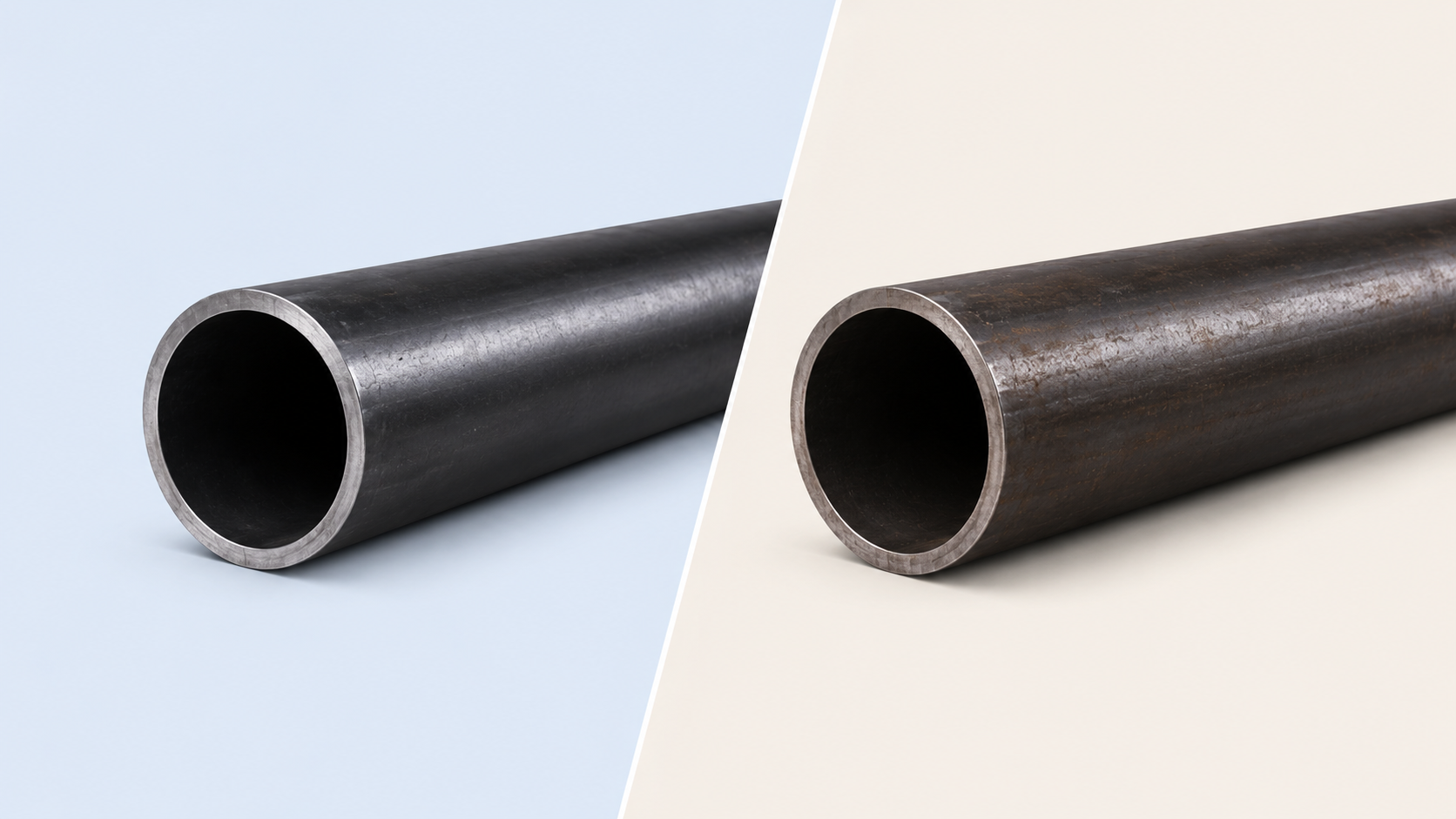
Standard carbon steel pipes do not hold up well when temperatures rise significantly. They lose mechanical strength and the surface starts to scale. That is why alloy steel pipes are used in high-temperature service. Elements like chromium and molybdenum are added to improve performance under heat. If you are comparing alloy steel P11 pipes with P22, both grades fall under the ASTM A335 standard for seamless pipes used in high-temperature applications. They are not interchangeable, though. The differences in chemical composition directly affect how they perform and where each one should be used.
What Are Alloy Steel P11 Pipes?
Alloy steel P11 pipes are seamless low-alloy pipes built for high-temperature service. Industrial Alloy Steel P11 Pipes are manufactured under ASTM A335 and contain roughly 1.25% chromium and 0.5% molybdenum. The chromium slows down oxidation, which prevents pipe walls from scaling prematurely. Molybdenum adds tensile strength so the pipe holds up under sustained heat. Because these are seamless pipes, there is no welded seam. The pipe is formed by piercing a solid steel billet, so the structure is uniform throughout. This matters because weld-line failures under pressure are eliminated.
What Are Alloy Steel P22 Pipes?
P22 pipes are also seamless and covered by the same ASTM A335 specification. The difference is the alloy content. Alloy Steel P22 Seamless Pipe Specifications typically include approximately 2.25% chromium and 1.0% molybdenum. That is nearly double the chromium and molybdenum compared to P11. The higher chromium content gives better protection against oxidation and corrosion, particularly in environments where hydrogen or sulphur compounds are present at high temperatures. The additional molybdenum improves creep resistance. Creep is the slow deformation of a metal under constant stress and high temperature. P22 does this better than P11, and that’s why it’s used in more demanding setups.
Difference Between P11 and P22 Pipes
The main differences are chemical composition, operating temperature range, weldability and cost. P22 has more alloy, which makes it perform better under heat and pressure, but is harder to install. P11 has less alloy content, lower cost, and is easier to weld.
| Feature | P11 Pipe | P22 Pipe |
| Chromium Content | 1.00% to 1.50% | 1.90% to 2.60% |
| Molybdenum Content | 0.44% to 0.65% | 0.87% to 1.13% |
| Temperature Resistance | Up to 550°C (1022°F) | Up to 600°C (1112°F) |
| Pressure Handling | Moderate to High | High to Very High |
| Tensile Strength | Minimum 415 MPa | Minimum 415 MPa |
| Corrosion Resistance | Moderate resistance to scaling | High resistance to oxidation |
| Weldability | Good; needs moderate preheating | Fair; needs strict preheating/PWHT |
| Cost | More economical | More expensive |
| Typical Applications | Medium pressure steam lines, boilers | High pressure steam lines, refineries |
Temperature and Pressure Performance Comparison
At high operating temperatures, metals are exposed to creep stress. P11 pipes generally hold up to around 550°C before strength begins to drop off. P22 handles continuous temperatures up to 600°C because of the extra molybdenum. The difference is noticeable in allowable stress limits as well. As the temperature rises, both grades lose some allowable stress, but P22 retains higher limits for longer. If your system runs at both high pressure and high temperature together, P22 gives you more room before you hit the safety boundary. Reviewing the ASME SA335 P11 Seamless Pipe mechanical properties shows how the yield strength drops at progressive temperature steps versus P22.
Which Industries Prefer P11 Pipes?
P11 is used where operating temperatures are elevated but not extreme. Power plants use them for steam and reheat lines running at moderate temperatures. Oil refineries and petrochemical plants install them in process lines moving hydrocarbons. P11 is also extensively used in industrial boilers, superheater tubes and heat exchangers. In such instances, it is better to purchase from leading ASTM A335 grade P11 pipe manufacturers who can guarantee the product meets the chemical and mechanical standards. A335 Alloy Steel P11 Seamless Pipes are reliable for these conditions and do not require the extra cost of higher alloy grades.
When Should You Choose P22 Pipes?
P22 is the correct choice when your system runs temperatures that go beyond what P11 can handle safely. High-pressure steam lines in modern power generation plants often require P22 because those plants operate at higher temperatures to improve thermodynamic efficiency. Refinery units such as hydrocrackers and catalytic crackers expose piping to high-pressure hydrogen at elevated temperatures. P22 handles hydrogen damage and graphitisation much better in those conditions. If long-term reliability under heavy thermal cycling is a requirement, P22 is the practical option despite the added complexity during installation.
Cost Comparison Between P11 and P22 Pipes
P11 is less expensive to purchase. Chromium and molybdenum are costly alloying metals, and P22 uses more of both. Mill processing for P22 also requires more precise heat treatment to achieve the right grain structure, which adds to manufacturing cost. Installation is also a further cost with P22. Higher hardenability means it can be brittle when cooled too fast after welding. Mandatory preheating and post-weld heat treatment (PWHT) are required, which means more equipment, more labour time, and higher overall installation cost. P11 welding is easier and less expensive to carry out on site. That said, choosing P11 for an application that actually needs P22 will result in early failure. Emergency shutdowns and pipe replacement cost far more than the initial savings on material.
How to Choose the Right Alloy Steel Pipe for Your Project
Check the operating temperature first. If it stays below 500°C, P11 is usually sufficient. If temperatures go higher, especially with high pressure simultaneously, look at P22. Consider what the pipe will carry. Sulphur compounds, hydrogen, or other corrosive process fluids at high temperature are better handled by P22 due to the higher chromium content. Factor in your full budget, including welding and heat treatment costs, not just material price. Also review the applicable industry codes for your project, as certain pressure and temperature combinations have minimum grade requirements built into the standard.
Conclusion
P11 is a practical choice for moderately high-temperature systems like standard industrial boilers and refinery process lines. P22 is required when conditions exceed what P11 can handle, particularly in high-pressure steam systems and refinery units dealing with hydrogen or sulphur at elevated temperatures. Choose the wrong grade and you get early failure or unnecessary project expense. Eckhardt Steel & Alloys can review your project specs and confirm the right material. For technical consultation or product inquiry, Contact us.