
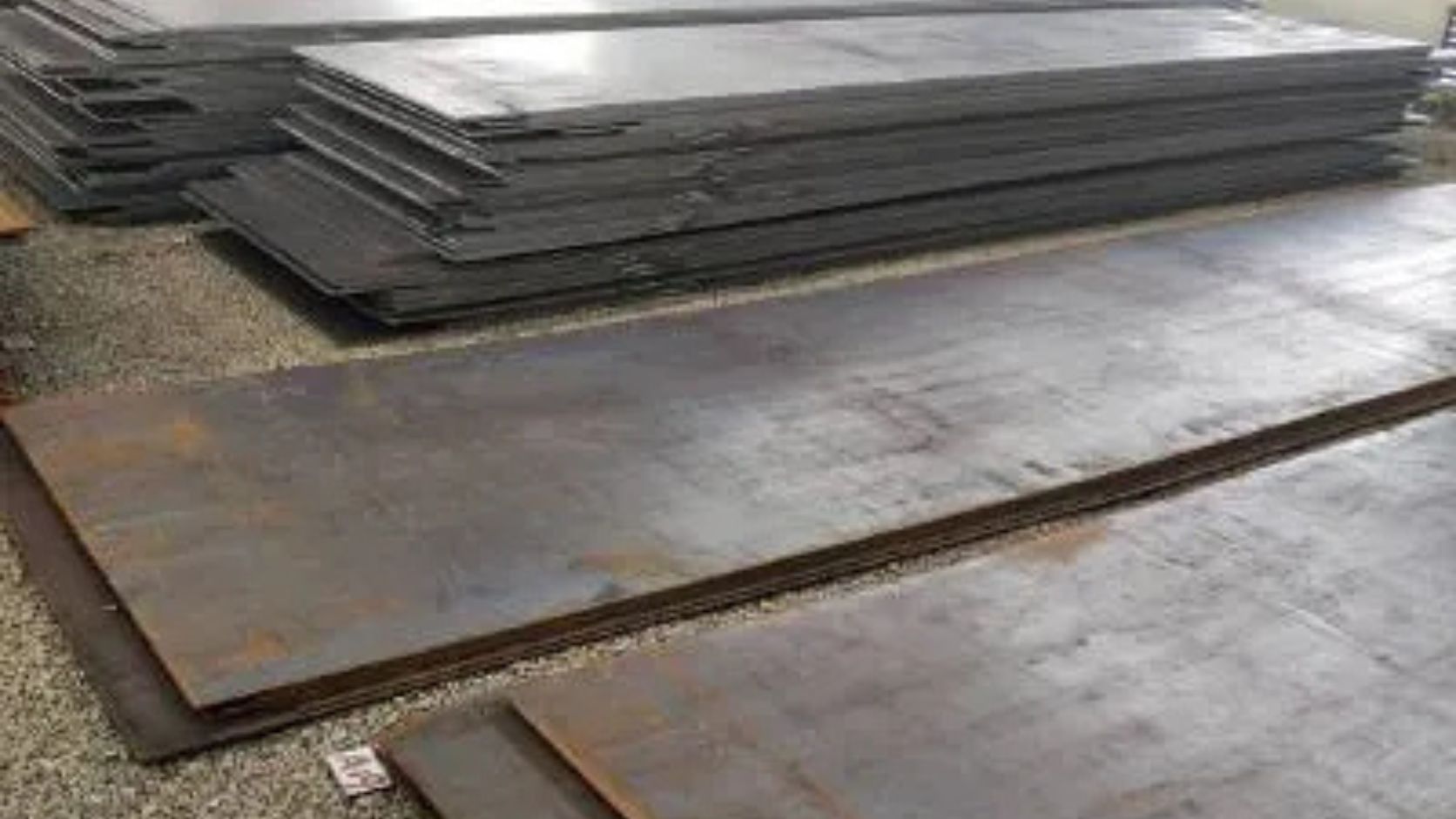
Understanding HIC and Why It Occurs
Hydrogen sulfide does not corrode steel the way oxygen does. In sour service, H₂S reacts at the steel surface and releases atomic hydrogen that migrates into the metal lattice, collecting at manganese sulfide inclusions, laminations, and internal voids. Pressure at those trapping sites rises until it fractures the surrounding microstructure, producing the lateral, step-wise cracks that define hydrogen-induced cracking. Pipelines carrying sour crude, pressure vessels in wet gas processing, and storage tanks holding H₂S-bearing hydrocarbons face this mechanism throughout their operating life. One dormant crack can reach through-wall dimensions during a pressure excursion, triggering emergency shutdown and repair costs that routinely exceed seven figures.
Sourcing from a qualified HIC Resistant Steel Plate Manufacturer addresses this before fabrication begins. Plates for sour service hold sulfur below 0.002%, carry calcium-treated inclusions, and meet NACE TM0284 crack length and crack sensitivity ratio limits. This article covers their benefits, properties, and key industrial applications.
Key Benefits of HIC Resistant Steel Plates
Specifying HIC-resistant plates delivers value at three stages of an asset’s life: during fabrication inspection, at in-service monitoring intervals, and at end-of-life decommissioning. Each benefit below connects directly to what the metallurgy actually does.
Enhanced Resistance to Hydrogen-Induced Cracking
Calcium treatment reshapes elongated MnS inclusions into globular oxysulfides that hydrogen cannot easily populate. Crack length ratios on qualified plate stay below 15% and crack thickness ratios below 5%, which are the NACE TM0284 acceptance thresholds. Propagation through the plate cross-section stalls before step-wise cracking reaches the surface.
Improved Safety in Critical Operations
Blister formation and through-wall cracking in a pressurised system can trigger rapid depressurisation or, in gas service, ignition risk. HIC resistant steel plates cut the probability of those failure modes by removing the microstructural conditions that sustain crack growth under hydrogen partial pressure.
Longer Equipment Service Life
Assets built from standard plate in sour service frequently require weld repairs or section replacement within 8 to 12 years. HIC-qualified plate, operating within the same service envelope, sustains structural integrity across inspection cycles that extend 15 to 20 years when chemistry and heat treatment meet full qualification requirements.
Reduced Maintenance and Downtime
Fewer crack indications per inspection cycle translates directly into shorter turnaround scope. Refinery operators running NACE-qualified plate on desulfurization vessels report inspection-to-closeout windows that run 30 to 40% shorter than comparable units fabricated from unqualified carbon steel grades.
Excellent Performance in Sour Service Conditions
pH levels below 4 in the presence of dissolved H₂S accelerate hydrogen uptake sharply. Sour service steel plates maintain their crack resistance across this pH range, covering the upstream well environments, amine regeneration columns, and sour water strippers where standard plate grades fall short within the first few inspection cycles.
Compliance with Industry Standards
ASTM A516 Grade 60 and 70 with supplemental HIC testing, NACE TM0284, and EFC Publication 16 define the qualification path most project specifications reference. Plates that carry documented test reports against these standards move through third-party material inspection without hold points, keeping fabrication schedules intact.
Industrial Applications of HIC Resistant Steel Plates
From upstream wellheads to downstream chemical reactors, HIC resistant plates appear wherever H₂S exposure and mechanical stress act on carbon steel simultaneously. The sectors below account for the bulk of global consumption.
Oil and Gas Industry
Gathering pipelines, two-phase and three-phase separators, wellhead pressure vessels, and crude storage tanks operating on sour fields all run on HIC resistant plate as the baseline material specification. Upstream environments combine high H₂S concentrations with wet conditions that sustain hydrogen uptake throughout the asset life.
Petrochemical Plants
Amine contactor shells, rich solvent flash drums, sour water knockout vessels, and hydrocracker reactors carry feedstocks with sulfur concentrations that push H₂S partial pressures well above the sour service threshold. Plate qualified under NACE TM0284 handles those conditions without the progressive microstructural degradation that standard carbon steel accumulates over repeated thermal and pressure cycles.
Refineries
Hydrotreater and hydrodesulfurization reactor shells, high-pressure separator drums, and recycle gas knock-out vessels run at hydrogen partial pressures that compound HIC risk beyond what sour liquid service alone creates. In these circuits, HIC resistant steel plates maintain wall integrity at thicknesses and joint efficiencies that regulatory inspection intervals demand.
Offshore Platforms
Salt spray, wave loading, and produced fluid exposure interact in offshore structures to accelerate both surface corrosion and subsurface hydrogen ingress. Structural and pressure-retaining plate on topsides processing modules, subsea manifold housings, and riser clamps specifies HIC-qualified material to cover both exposure pathways simultaneously.
Power Generation Facilities
Certain combined-cycle plants and waste-to-energy units route flue gas or process streams with measurable sulfur dioxide and hydrogen sulfide content through heat recovery equipment. Pressure parts in those circuits, specifically steam drums and economiser headers, benefit from HIC-qualified plate where operating chemistry falls within sour service classification.
Chemical Processing Industry
Sulfur recovery units, Claus reactor feed/effluent exchangers, and hydrogen production vessels all contact H₂S-rich process streams at conditions that exceed the sour service threshold. HIC resistant plates sustain pressure containment in these units without the cracking that forces unscheduled outages in corrosion-prone chemical process environments.
Future Demand for HIC Resistant Steel Plates in Industrial Projects
Capital spending on oil and gas infrastructure crossed USD 500 billion globally in 2023, and projections point higher through 2030, with a growing share directed at sour field development across the Middle East, Central Asia, and offshore West Africa. Petrochemical capacity additions in India and Southeast Asia add fabrication volume for sour service equipment year on year. Asset integrity programs at major operators now mandate HIC testing on plate even where H₂S concentrations sit marginally above the sour threshold, reflecting a shift toward longer equipment life targets rather than minimum code compliance. That shift sustains demand for qualified HIC resistant plate well beyond what project pipelines alone would generate.
HIC resistant steel plates prevent hydrogen-induced cracking by addressing the metallurgical conditions that allow it to start, not by managing it after the fact. Their track record in oil and gas, petrochemical processing, refinery units, offshore installations, and power generation makes the specification straightforward for engineers who weigh repair costs against upfront material premiums. Selecting plates with documented NACE TM0284 test results and full mill chemistry traceability delivers the operational confidence that critical sour service assets require across a full 20-year service life.