
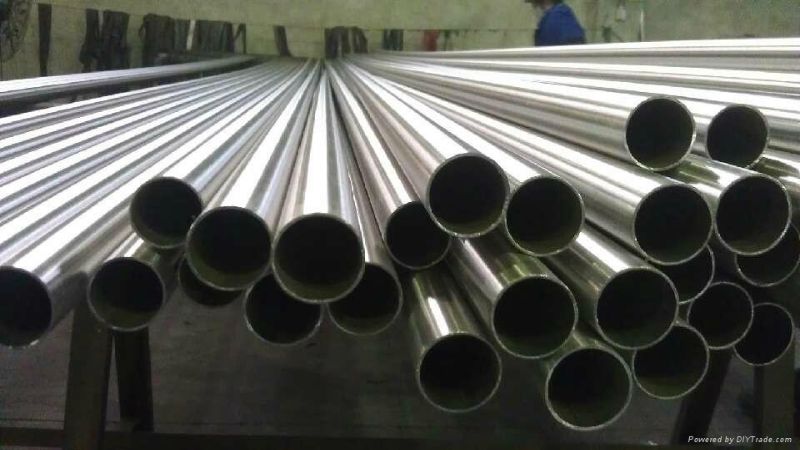
Selecting the right pipe type affects safety, cost, and system life. Carbon steel ERW pipes and seamless pipes are widely used in oil, gas, construction, and industrial systems. Both serve similar purposes, yet they differ in how they are made and how they perform in service. Carbon steel ERW pipes are produced using a welding process that forms a strong longitudinal seam. Seamless pipes are made without any welded joints. These differences influence strength, pressure limits, cost, and supply availability. This article discusses how the two pipe types differ in practical applications. It discusses the manufacturing process, strength, price, surface finish, and supply conditions. The purpose is to help engineers, consumers, and project planners in selecting the best pipe type for their technical requirements and budget.
What Are Carbon Steel ERW Pipes?
Carbon steel ERW pipes are made using the Electric Resistance Welding process. A flat steel strip is initially rolled into a cylindrical shape. The strip’s edges are then heated with an electric current and pressed together to create a welded seam. This method creates a continuous weld along the pipe length. The weld is strong and is usually tested using nondestructive methods. Carbon steel ERW pipes have uniform wall thickness and precise outer diameter control. The production process allows large volumes with stable dimensions. Because the process uses steel coils instead of solid billets, manufacturing costs remain lower. These pipes are commonly used in structural work, water pipelines, scaffolding, and medium-pressure transport systems where reliable performance and cost control are important.
What Are Carbon Steel Seamless Pipes?
Carbon steel seamless pipes are manufactured from solid steel billets rather than flat strips. The billet is first heated to a high temperature. It is then pierced through the center to form a hollow tube. After piercing, the pipe passes through rolling and sizing mills that shape it to the required diameter and wall thickness. Since no welding occurs during production, the pipe body remains continuous without a seam. This absence of a welded joint gives seamless pipes strong pressure resistance and good structural strength. Seamless pipes are often selected for demanding environments. These include high-pressure pipelines, boilers, refineries, and chemical processing units. The ability to withstand extreme pressure and temperature makes them suitable for critical systems where safety and reliability are essential.
Difference Between Carbon Steel ERW Pipes and Seamless Pipes
Both pipe types serve similar industries; their features differ according to production processes. The following sections discuss the primary technical distinctions.
- Manufacturing Process
Carbon steel ERW pipes are formed from steel coils. The strip is rolled into a pipe and welded along the length using electric resistance welding. Seamless pipes are produced by piercing a billet, which results in a hollow tube that does not require welding. The production route forms a continuous structure throughout the pipe core.
- Strength and Pressure Capacity
Seamless pipes work better in high-pressure systems. As there are no weld seams, they are less likely to fail under high stress. As it is manufactured in compliance with rigorous quality standards, ERW pipe continues to provide dependable strength for systems under moderate pressure.
- Cost Difference
Carbon steel ERW pipes generally cost less than seamless pipes. The coil-based manufacturing method uses less material waste and has a higher production speed. Seamless pipes require billet heating and complex rolling operations, which increase production costs.
- Dimensional Accuracy
ERW pipes often provide better dimensional control. Modern rolling and welding lines maintain a stable diameter and wall thickness. Seamless pipes may show small variations due to the hot rolling process during billet piercing and elongation.
- Surface Finish
ERW pipes usually have a smoother and more uniform outer surface. The strip forming process allows better finishing control. Seamless pipes may require additional surface treatment or machining depending on the production route.
- Availability and Lead Time
Carbon steel ERW pipes are readily available as they are manufactured in large quantities. Mills can deliver them quickly for the majority of projects. Seamless pipes require longer production cycles, which can extend the delivery times for large orders.
Application-Based Comparison
Both pipe types support several industries. The choice depends on pressure level, safety needs, and project budget.
- Oil and Gas
Carbon steel seamless pipes are widely used in drilling, high-pressure pipelines, and refinery systems. These operations demand high strength and pressure resistance. Carbon steel ERW pipes are often used in gathering lines, transportation pipelines, and structural parts of the oil industry.
- Construction and Infrastructure
Carbon steel ERW pipes dominate this sector. They are used for building frames, bridges, scaffolding, and piling systems. Their dimensional consistency and lower cost suit large construction projects.
- Power Plants and Industrial Systems
Seamless pipes are commonly used in boilers, steam lines, and heat exchangers where pressure and temperature levels remain high. ERW pipes support cooling water lines, structural piping, and auxiliary systems within the same plants.
- Water and General Piping
Water supply networks, irrigation systems, and municipal pipelines often use carbon steel ERW pipes. Their cost-benefit and availability make them suitable for large distribution networks.
Advantages of Carbon Steel ERW Pipes
Carbon steel ERW pipes offer several practical benefits for industrial and construction projects. The main advantage is cost efficiency. The manufacturing process uses steel coils, which reduces production expenses and material waste. This makes ERW pipes a practical choice for large pipeline systems and structural work. Dimensional consistency is another benefit. The forming and welding process allows accurate diameter and wall thickness control. This improves installation and alignment during construction. Surface finish also remains smooth and uniform, which supports coating and corrosion protection. Availability is strong because many mills produce these pipes in high volumes. Carbon steel ERW pipes also perform well in medium-pressure systems such as water pipelines, structural applications, and industrial transport lines where high strength is not the primary requirement.
When to Choose Seamless Pipes
When operating conditions become harsh, seamless pipes are preferred. High-pressure fluid systems sometimes require pipes with no welded joints. The continuous metal structure offers increased resilience to internal stress. Seamless pipes are also useful in high-temperature systems as they preserve structural integrity during thermal expansion. Boilers, refineries, and petrochemical manufacturing industries often use them for this purpose. Safety-critical systems also rely on seamless pipes. These include high-pressure steam pipes, hydraulic systems, and power plant components. Although the cost is higher, increased reliability often compensates for the investment in challenging applications. Engineers prefer seamless pipes when the failure risk is exceptionally minimal and operating circumstances exceed conventional industrial standards.
Factors to Consider Before Choosing
Pipe selection depends on several technical and economic factors. Operating pressure remains the first point of review. Systems with higher pressure usually require stronger pipe structures. Temperature also affects material choice, since some processes operate at extreme heat. The project budget plays a major role as well. Carbon steel ERW pipes offer cost advantages for large pipeline networks. Compliance with industry standards must also be considered. Many projects adhere to ASTM, API or ASME specifications, which define pipe types Of Carbon Steel ERW Pipe and quality levels. The project’s size and delivery timetable also influence the selection. ERW pipes are easy to use; seamless pipes may require a longer manufacturing process. A balanced evaluation of these elements helps in determining the best solution.
Conclusion
Carbon steel ERW pipes and seamless pipes play vital roles in industrial piping systems. Each type has specific benefits based on the operating conditions and project size. ERW pipes provide improved dimensional control, lower costs, and wide availability. Seamless pipes provide higher strength under high-pressure and high-temperature conditions. This comparison shows that neither option can replace the other in all cases. Engineers choose pipe types based on pressure restrictions, safety standards and budget restraints. Several projects combine the two categories inside the same facility. In fact, carbon steel ERW pipes remain a dependable option for structural work and medium-pressure transportation systems where cost and supply efficiency are critical.